
Black mass successfully produced!
Black mass – bright future
At our battery recycling facility in Halmstad, we have now produced our first-ever black mass – a crucial step on the path towards sustainable battery production.
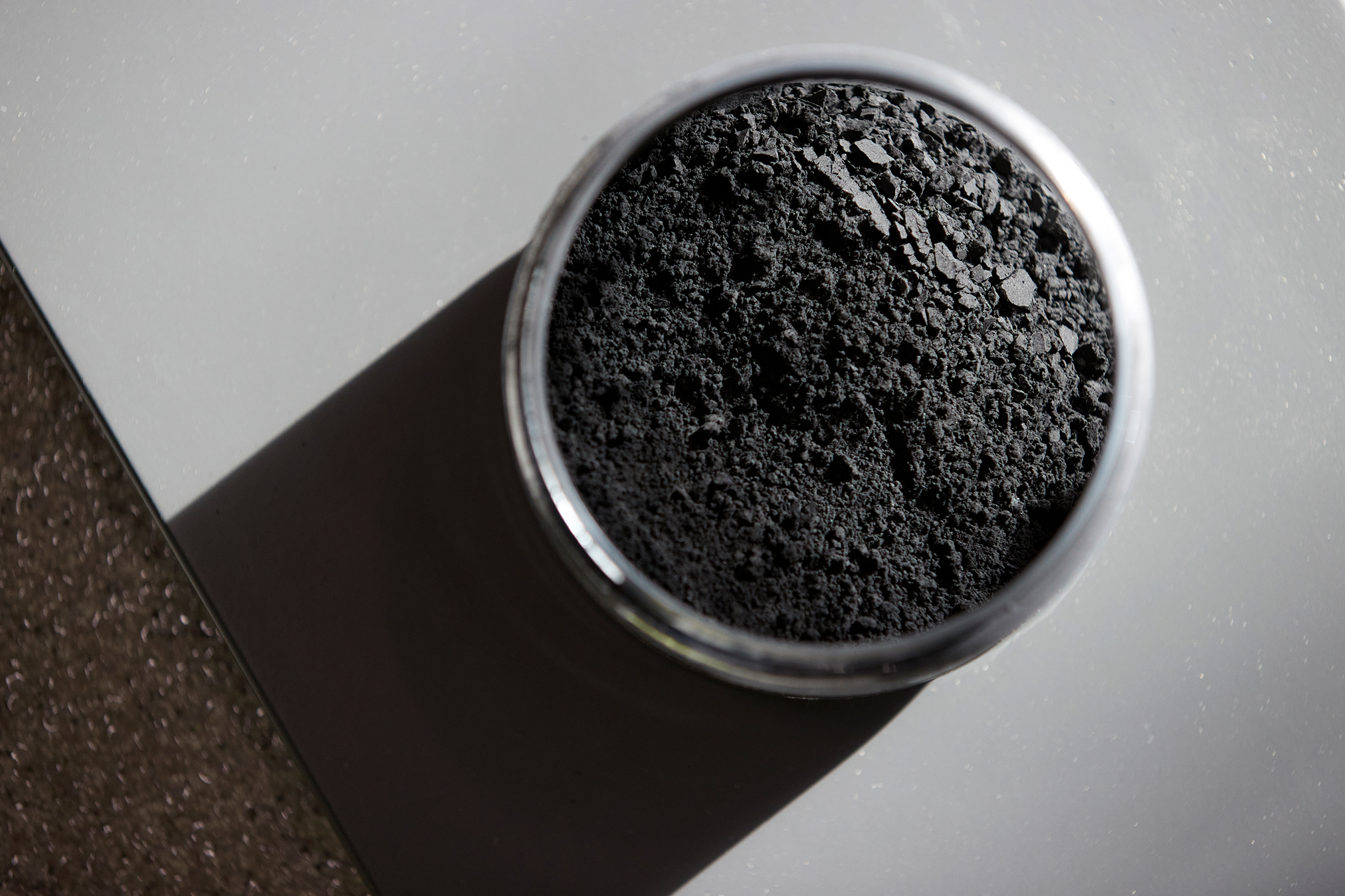
What is black mass?
Black mass can be found in lithium-ion batteries and is a mixture of valuable metals such as lithium, manganese, cobalt, and nickel.
Why produce it?
Lithium-ion batteries are the backbone of modern electric vehicles, but producing them often involves environmentally harmful practices. Our black mass is a potential game-changer for the electromobility industry.
Being able to produce black mass means that we can now recycle the entire battery. This minimizes the carbon footprint and labor compared to traditional mining for battery materials, making it the sustainable choice.
What’s the next step?
The goal is ambitious – to recycle 10,000 tons of batteries annually, with a substantial portion of the black mass to be refined and reused in new batteries.
As global directives like the 2026 Battery Directive emphasize the recycling of battery materials, producing black mass will become increasingly important.
A unique process
“I am extremely proud of the amazing team I work with and the dedication and drive that exists within our workgroup. It's great people like my colleagues who make this possible. I'm also proud that we are the first facility within Stena to work with lithium-ion batteries. We have an amazing new facility in Halmstad and a unique process that makes our battery recycling very efficient.”
- Carina Petersson, Plant Manager at Battery Recycling Center in Halmstad, Sweden
Latest news
![Stacked cars]() 2026-08-14
2026-08-14Automotive circularity becomes mandatory: What the new EU rules mean
![Major advances toward full-scale recycling of wind turbine blades - Image: Vestas]() 2026-05-12
2026-05-12Major advances toward full-scale recycling of wind turbine blades
![Vestas visiting Stena Recycling in Halmstad Sweden]() 2026-04-29
2026-04-29Stena Recycling and Vestas strengthen collaboration on blade circularity at industrial testbed
![Hand of Stena Recycling employee touching material.]() 2026-04-17
2026-04-17Stena Recycling’s Climate Impact Report for 2025 is published
![A Stena Recycling expert prepares to discharge a lithium-ion vehicle battery.]() 2026-02-04
2026-02-04Stena Recycling expands major investment in electric vehicle batteries – invests over SEK half a billion
![Close-up of gloved hands working on electric vehicle battery modules during inspection or recycling process]() 2025-12-02
2025-12-02Stena Recycling in partnership to scale a national circular battery value chain in Sweden
![Annual report 2024/2025 Stena Metall]() 2025-11-26
2025-11-26Stena Metall’s annual reports for 2024/2025 now available


