
Design for recycling - measure and improve product recyclability
Enhance product end-of-life performance with design strategies that improve recyclability, reduce waste, and enable circular business practices.
- Maximize End-of-Life material recovery
- Boost product recyclability & compliance
- Simplify disassembly for real-world recycling
- Turn design choices into circular economy impact

Designing with recyclability in mind is crucial for product manufacturers to meet regulatory demands and ensure that products contribute to a circular economy
Regulations such as the European Ecodesign for Sustainable Products Regulation (ESPR) the WEEE and the End-of-Life Vehicles Regulation are pushing for more sustainable products, requiring manufacturers, especially those in sectors like electronics, furniture, and automotive, to focus on design for recycling (DfR). These regulations are driving demand for recycled materials and encouraging investment in recycling infrastructure. However, the design of products remains key to ensuring recyclability, as valuable materials are often lost during waste handling.
Without a strong demand for recycled content and extended responsibility for end-of-life recycling, recyclers lack the motivation to invest in advanced technologies. Many designers and engineers also lack a deep understanding of recycling processes, leading to products that are difficult to recycle or incompatible with existing systems. By requiring more recycled materials and setting recyclability standards, the ESPR is driving market demand and improving recycling infrastructure, highlighting the need for better DfR practices.

Every product eventually reaches the end of its life, so it’s essential to design with this in mind, enabling recycling and reducing waste. Through years of DfR assessments on our clients’ products, we’ve noticed key challenges:
- Increasing product complexity, with more diverse plastics and composites that current processes can’t handle.
- A growing trend of incorporating electronics and batteries into products like toys, which complicates recycling.
- A lack of design considerations on separating materials and accessing electronic components like PCBs.

Ready to take the next step toward circularity?
At Stena Circular Consulting, we have created smart introductory services to help you start your journey within circular product design.
From an inspiring workshop within design for circularity to analyzing recycling rates, screening carbon footprint, identifying alternative materials with lower environmental footprint, and maximizing material recyclability and reuse – our experts are here to guide you every step of the way.
Practical insights: How to design for real-world recyclability
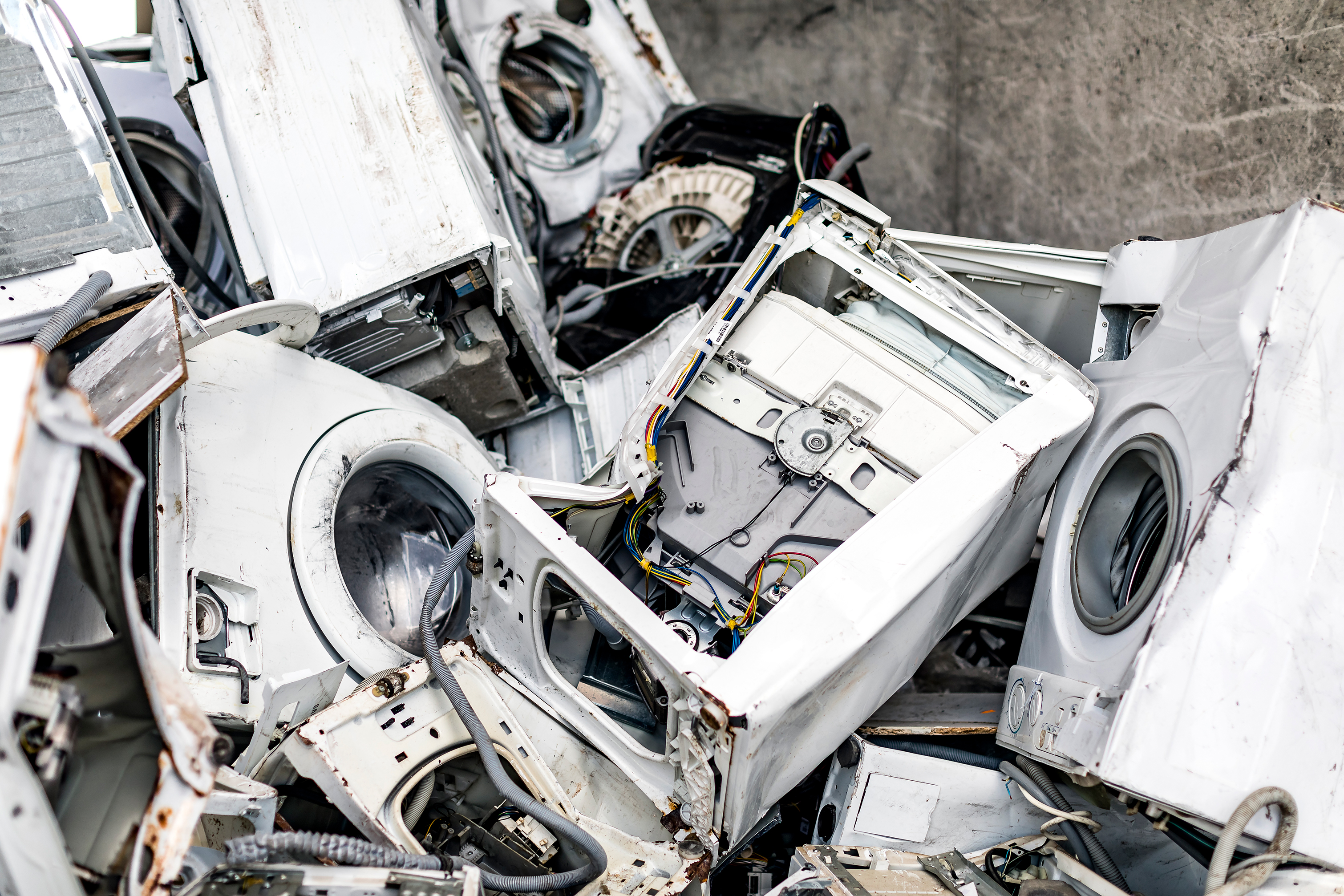
Different products follow different paths in the end-of-life waste stream. Analyzing the recycling process for specific product categories provides valuable insights for designing products that are truly recyclable. Understanding which components are manually handled and require easy disassembly, versus those that will be shredded and sorted by machines, allows for better material separation. This approach ensures the production of cleaner material fractions, leading to the creation of high-quality new raw materials.

Our design for recycling (DfR) methodology
Stena Circular Consulting employs a hands-on, fact-based methodology to analyze a product’s recycling potential, focusing on three key dimensions:
- System: We take into account system prerequisites, such as regulatory frameworks, user behavior, recycling technologies that support recycling. Our assessment aligns with ESPR and other relevant policies specifying eco-design and end-of-life requirements.
- Business model: We evaluate economic drivers that support end-of-life management, including incentives and other business factors that promote effective recycling and circular economy practices.
- Product design: Our product design evaluation focuses on material choice (whether the materials are recyclable within current processes) and disassembly (whether the joining solutions allow for efficient material separation).

Our methodology adapts to your objectives and product's complexity. The more detailed the input, the more precise the results. This process includes analyzing products and end-of-life (EoL) systems to define recycling rates based on actual yields from real operations while identifying challenges and areas for developments. This creates a baseline to showcase your capabilities, track progress, compare products, and uncover competitive advantages. We work closely with your team to ensure our recommendations fit your needs and drive impactful design improvements.
Components of the design for recycling (DfR) method
Depending on your team’s need, we can adapt the pace of intervention, through an iterative approach, from intensive workshop sessions to full scope analysis. To evaluate your product’s baseline for recyclability, we offer a structured methodology that includes:

System mapping

Product tear-down

Quantitative analysis

Qualitative analysis

Identifying and addressing problematic materials
Our assessments often identify materials that are problematic due to their non-recyclability, difficulty separating, or contamination:
Non-recyclable materials:
- Inert materials like concrete or ceramics are inherently non-recyclable and typically end up in landfills or as filling material.
- Vulcanized rubber is hard to separate and recycle because of its strong molecular bonds and additives.
Recyclable materials with systemic challenges:
- Glass is recyclable but often not processed outside packaging streams due to system limitations.
- Plastics with fillers, such as chalk or glass fibers change plastic density, contaminating the recycling stream as they are sorted into heavier fractions.
Complex materials:
- Composites made from multiple materials require specialized recycling technologies.
- Electronics/PCBs contain small amounts of various materials, making extraction and recycling economically challenging.
Design recommendations for improved recycling
Our design for recycling methodology offers clear, actionable suggestions to enhance your product’s recyclability. We work closely with your team to pinpoint specific areas for improvement, focusing on key design changes that make your products’ end of life more efficient. This includes prioritizing the use of recyclable materials and reducing the complexity of mixed-material components, which often complicate the recycling process.
We support you implementing design strategies that simplify disassembly, such as using uniform materials for joints and components, allowing for quicker, more effective recycling. Incorporating modularity and ensuring easy access to parts like electronics are further recommendations that optimize sorting and recycling efficiency.
By aligning design efforts with recycling goals, we help you create products that enable a circular economy. Additionally, we assist in identifying the internal capabilities and external partnerships necessary for your organization to succeed in designing for recyclability.

Stena Circular Consulting performed a recyclability assessment of one of our lift products giving us reliable data on how recyclable the lift is and an measure in % on the over all recyclability rate that can be used for benchmarking. More importantly the assessment provided us with ideas for how to improve the recyclability rate by designing parts that enables better separation of materials.
Theodor Ernstson, Director Product Management & Sustainability, Cibes Lift Group AB
FAQ about design for recycling
A product with high recyclability is easy to separate where needed, contains materials that can be recycled in existing systems, and avoids complex material combinations. By including recycling as part of product development, companies can increase material recycling and reduce resource losses.
The fact that materials are recyclable does not mean that the product will actually be recycled. Design, disassembly, collection, sorting, and recycling processes determine how large a share is actually materially recycled. Recyclability therefore needs to be assessed based on real industrial recycling systems.
Stena Circular Consulting combines established standards, such as EN 45555 and ISO 22628, with its own design for recycling methodology. The analysis is based on product disassembly, material mapping, and knowledge from Stena Recycling’s operations to identify design changes that can improve recyclability.
Material combinations, glued constructions, composites, integrated batteries, and hard-to-access electronics often have the greatest impact on recycling rate. Through targeted design changes, recyclability can be improved without compromising function or quality.
The Ecodesign for Sustainable Products Regulation (ESPR) includes requirements related to product information, resource efficiency, recycled content, and recyclability. design for recycling helps companies calculate, improve, and document recyclability, and translate regulatory requirements into concrete design decisions.
Requirements vary between product groups under ESPR. Recyclability is a central criterion and may include material content, possible disassembly, and instructions for correct handling. This information helps consumers and recyclers make better decisions at the product’s end of life and may, in some cases, support the closing of a DPP.
Recyclability is measured by assessing what share of a product can be materially recycled in real recycling systems. The result can be used to show how key products are designed for recycling, identify resource outflows, and strengthen reporting under ESRS E5-5. Stena Circular Consulting provides documentation that supports reporting.
When more materials are recycled and returned to new products, the need for virgin raw materials decreases. This can reduce the product’s climate impact and improve the results in both life cycle assessment (LCA) and product carbon footprint (PCF) calculations.
By combining knowledge of material properties, recycling processes, and product requirements, companies can increase the share of recycled material without compromising quality or performance. This strengthens resource efficiency, circularity, and the product’s long-term competitiveness.
Stena Circular Consulting helps companies move from assumed recyclability to verifiable design decisions based on how products are actually handled in industrial recycling systems. By combining product development, circular economy, and knowledge from Stena Recycling’s operations, recycling is translated into business value, circularity, and competitiveness.


